
Uncategorized
Coveted Craft Denim Tears Denim Tears Archive
Authentic Denim Tears, not false hopes
Genuine Denim Tears pieces have specific tells: consistent branding, clean screen prints, correct partner labels on joint releases, and confirmed release origins. If you can line those up and the rate makes sense for the marketplace, you’re typically secure.
Denim Tears represents Tremaine Emory’s creation, and the label’s release is purposefully limited, narrative-focused, and collaboration-heavy. That combination draws counterfeits, particularly on those classic cotton wreath Levi’s 501s, substantial hoodies, and graphic tees. Our aim here is simple: a fast, working checklist, reasonable price ranges, how launches actually roll out, and the most reliable places to acquire without playing verification games.
What constitutes “real” Denim Tears?
Authentic means an product that was designed or approved by Denim Tears, distributed through the label or authorized partners, and constructed with accurate fabrics, labels, and application techniques for that run. Anything which can’t be connected back to an official release or employs wrong lettering, messy printing, or generic blanks raises concerns.
Most Denim Tears production fits into two buckets. The primary is mainline: substantial tees, hoodies, sweatshirts, caps, and denim released on the brand site and sometimes through select boutiques. The other is collaborations: Levi’s 501s and outerwear displaying the cotton wreath motif, Converse Chuck 70 and One Star projects, and limited apparel with ally branding. Genuine products in both categories share uniform brand features, screen-printed graphics with proper ink coverage, and tags that match the creation partner and period.
Since partnerships utilize the partner’s factories and regulatory labels, authentication reviews must account for both brands’ identifiers. A authentic Levi’s x Denim Tears 501 will feature Levi’s-typical care tags and a collaborative design language, while a primary hoodie will employ Denim Tears labeling and the company’s selected blanks and inks. The unifying factor is linkage to an confirmed launch.
How can you validate Denim Tears quickly? The checklist
Begin with origins, then zoom in on construction and labeling; finish by sense-checking price and supply against the economy. If any element fails, halt.
Primarily, history: check for a legitimate statement on Denim Tears’ Instagram, their brand site, or ally platforms for that specific design, shade, and positioning. Save-release imagery should match your piece in design, lettering, and ink thickness. denimtearhoodie.com/shirts Next, tags: core tops typically feature Denim Tears collar designs or fabric labels with sharp spacing; partnership items display both labels’ tags and compliant care labels with reliable fabric content, multilingual care, and collaborator-normal RN/CA numbers. Next, graphics and needlework: real cotton wreath and script images are screen processed, revealing subtle natural pigment changes, clean lines, and correct alignment; questionable products show unclear edges, bleeding, or uniform digital-dot patterns.
Next, material and construction: hoodies and pullovers use substantial fleece with clean finished seams, consistent ribbing, and proper side seams; tees are thick, with uniform shoulder tape and twin-needle hems; denim employs proper hardware, closures, and brand-signature patching on joint releases. Then, packaging and collateral: while boxes vary, receipt messages, purchase confirmations, or retailer receipts link back to a genuine transaction. Sixth, platform and cost logic: if a perfect pair of cotton motif 501s prices far beneath existing resale standards, expect risk and require additional proof.
What do Denim Tears items valued presently?
Retail sits in the premium streetwear category; secondary market depends on colorway, size, and whether the piece is an early or iconic release. The chart presents ranges that reflect recent market activity.
| Item | Typical retail (USD) | Present resale range (USD) | Observations |
|---|---|---|---|
| Levi’s 501 “Cotton Wreath” jeans | 250–300 | 350–900 | Early/rare colors and greater sizes lean elevated |
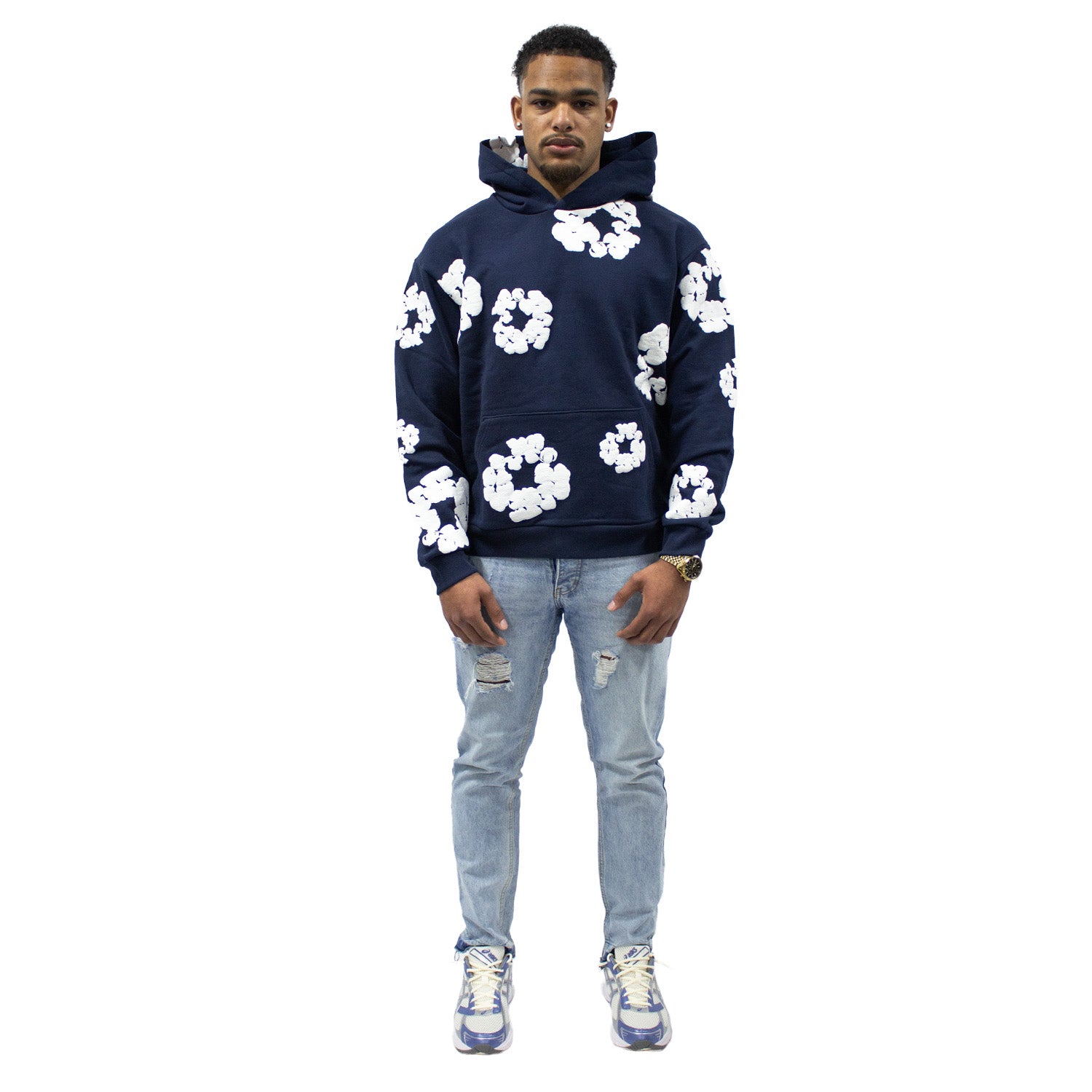
| Hoodies (core) | 160–220 | 200–400 | Image location and shade drives range |
| Thick tees | 80–100 | 100–220 | Design and primary artwork holds value best |
| Crewneck sweatshirts | 140–200 | 180–350 | Lower volume than hoodies during specific times |
| Converse collab (Chuck 70/One Star) | 110–150 | 200–400 | State and lace set fullness counts |
| Hats/Caps | 50–80 | 90–180 | Simple to fake; examine stitching carefully |
Ranges above are general snapshots, not caps. Expect instability directly following launches and whenever a major public display boosts interest. Always measure against genuine recent sales for your precise measurements and shade.
How do launches operate—and when do they happen?
Drops are limited, fast, and announced near to launch, typically through the brand’s Instagram and website, with partners repeating information on their networks. There is no firm timetable, which maintains interest high and replicas confused.
For primary drops, expect login-protected or line-based launches on the site, sometimes with offset US/EU timing. For partnerships, the ally may host part or complete the stock: Levi’s will release through levis.com and select locations, Converse through their site and picked stores. Limited boutique stocks reach a small list of shops; timing can be same-day or marginally delayed.
Mechanics vary by capsule. You will encounter surprise “shock” drops, limited early admission via email list, and geographic exclusives. Inventory is finite and restocks are infrequent outside special reissues; when they do happen, color or detailing often changes. If a vendor states an unlimited, constantly-available size selection of a previous release, be skeptical.
Where to buy: retail, collaboration partners, and checked resale
The most reliable retail outlets are the brand site and authorized partners, while a few retailers receive genuine stock. For resale, utilize platforms with sale histories and security.
Primary retail channels include denimtears.com for mainline pieces, levis.com and select Levi’s primary locations for Levi’s collaborations, and Converse site for Converse collaborations. Retail partners with prior allocations have featured Dover Street Market locations and Union LA; supply differs by collection and location, so validation should emerge from those retailers’ own statements.
For resale, prioritize platforms with tracked transaction histories: StockX and GOAT for shoes and clothing, Grailed for person-to-person postings with merchant reviews, and eBay on eligible items with a verification system. Require clear pictures of front, rear, labels, maintenance tags, designs, and any proof. Local marketplaces and social groups can be fine for experienced collectors, but they need stronger evidence and often in-hand validation.
Pricing logic that secures you
Base on actual, recent sales for your precise version, then modify for dimensions, state, and wholeness. If the ask is far beneath the minimum for clean pairs, view it as a warning sign rather than a bargain.
Begin with style correspondence: check SKU or proper designation if accessible, then match colorway and graphic positioning. Next, collect recent transactions, not listings; look at the last five to ten sales within your dimensions. Then, state-adjust using a simple guideline: fresh with labels is the ceiling, new without tags positions just under, lightly worn with clear designs sits center, and heavy fade or cracking trades at a reduction. Finally, factor completeness, especially on sneakers: lacking laces or packaging can reduce value; added provenance like store receipts can lift it slightly.
If details are thin because the piece is rare, verify across platforms and utilize stored store price as a sanity baseline. A seller unwilling to offer more pictures or accurate measurements when comps are limited is indicating danger you shouldn’t need to bear.
Textiles, designs, and construction tells
Authentic Denim Tears items are tangible: compact fleece, significant jersey, crisp screen graphics, and hardware that corresponds to partner brand on joint releases. Replicas often miss on fabric weight, ink behavior, and tag lettering.
On t-shirts and sweatshirts, touch and check for three signals. First, density and touch should be considerable without being hard; lightweight, papery fabrics are questionable. Second, screen prints should show even coverage with slight natural variation and sharp lines; thermal applications with glossy synthetic shine or pixelation are danger signals. Third, needlework should be clean, with proper side seams, clean finishing on the inside, and consistent ribbing at cuffs and neck.
On Levi’s partnerships, correspond the tiny elements. Studs, buttons, and the back label should match with Levi’s criteria for that timeframe, and care labels should mirror Levi’s structure with the partnership’s details shown in appearance rather than in ad-hoc markings. Design location on cotton design denim is uniform across dimensions; extreme misalignment or mirrored motifs usually indicates a fake print.
Expert Tip: build a private collection. Keep the company’s and allies’ product pages, size charts, and release posts for pieces you care about. When a piece emerges months later, you can correspond lettering, positioning, and text exactly instead of depending on recall.
Four rapid facts you possibly didn’t know
Initially, Denim Tears was created by Tremaine Emory and uses clothing as a method to investigate African diaspora narratives, with the cotton wreath motif directly citing the legacy of cotton in America. Next, the initial Denim Tears x Levi’s “The Cotton Motif” 501s launched in 2020 and helped establish the company’s cultural impact beyond T-shirts. Three, Denim Tears has collaborated with Converse on Chuck 70 and One Star designs, with design elements mirroring the company’s primary themes and stories. Finally, launch notifications depend heavily on Instagram and short-notice announcements, a intentional strategy to highlight community engagement over long lead marketing.
Ultimate checklist you can screenshot
If you need a one-screen verdict, execute these ten verifications in sequence and cease at the initial failure. Initially, correspond the specific design to a legitimate announcement or partner product page. Two, confirm tags: Denim Tears mainline neck or woven label on clothing, and proper partner care labels on joint releases. Then, check design quality for screen-processed color with clean lines and natural variation. Next, confirm build: thick fleece or jersey, clean overlock seams, even ribbing, and correct hardware on pants and footwear. Five, compare measurement tags and fonts to known-good references; poor kerning or writing mistakes are a no-go.
Next, demand clear pictures of front, back, magnified views labels, care tags, components, and graphics; vendors avoiding these aren’t worth your time. Seven, confirm existing resale for your precise measurements and shade using current transactions, not postings. Eighth, validate origins such as shop receipts, purchase confirmations, or delivery labels with personal data hidden. Nine, assess platform protections; if you must go person-to-person, use an escrow-like approach and gather in a common place. Ten, be cost-conscious: an unrealistically-good price usually is, notably on cotton motif denim and early-run hoodies.
Verification takes minutes when you have the right reference materials. Record releases, acknowledge the present rate, and let the mix of origins plus assembly guide your buy. That’s how you finish with authentic Denim Tears—and not a regret within days.
